Newsletter Subscribe
Enter your email address below and subscribe to our newsletter
Enter your email address below and subscribe to our newsletter

 ByJohn A
Mars missions hinge on integrated systems that manage propulsion, power, thermal control, and guidance under harsh, radiation-rich, long-duration conditions. Orbital mechanics, attitude stabilization, and trajectory corrections require compact, efficient subsystems with fault tolerance and autonomous operation. Surface hardware must endure dust, heat, and radiation, while robust communications and data processing sustain command and science across long light-time delays. The interaction of these elements shapes endurance metrics and delta-v efficiency, inviting further examination of how they cohere in practice.
Mars mission technology hinges on a cohesive integration of propulsion, guidance, power systems, and thermal management, each optimized for harsh space environments and long-duration autonomy.
The analysis concentrates on orbital dynamics and system interfaces, detailing coordinate frames, attitude control, and trajectory corrections.
Thermal management sustains component reliability, balancing heat rejection with mass constraints, thereby enabling predictable, secure operations throughout extended Mars missions.
Propulsion, power, and endurance define the core capabilities required for sustained deep-space missions, where propulsion systems must provide efficient, reliable delta-v while mitigating mass penalties, energy storage, and system wear.
The assessment emphasizes propulsion efficiency and resilient power architecture, balancing thruster performance, energy density, and thermal management.
Endurance hinges on integrated systems, autonomy, and fault tolerance under mission-critical operational constraints.
Assessing the survivability of landers, rovers, and orbiters on Mars requires a rigorous appraisal of weather-induced and terrain-induced stresses and the corresponding mitigation strategies.
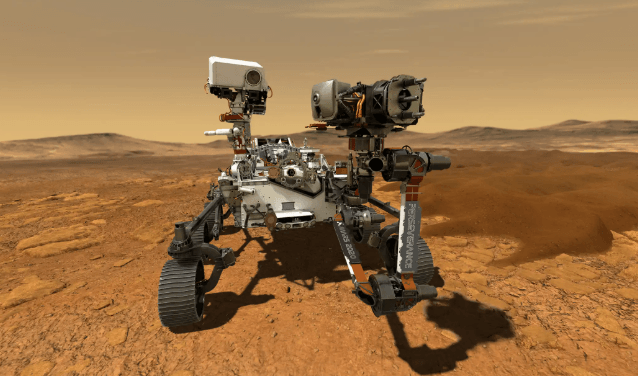
The analysis focuses on dust storms, thermal stability, and radiation shielding, evaluating rover durability and energy efficiency under extreme conditions.
Autonomous navigation integrates robust sensing, while landers and orbiters employ proven thermal control, protection, and subsystem redundancy.
The shift from survivability to communication, data, and autonomy across millions of miles centers on maintaining robust links, efficient data handling, and autonomous decision-making in deep-space environments.
Communication protocols govern latency, error correction, and scheduling, while data compression reduces volume without sacrificing essential detail.
Autonomy enables rapid, context-aware responses beyond Earth’s immediate oversight, preserving mission integrity despite extended delays and limited contact windows.
See also: tempnumberonline
Humans maintain health on long-duration Mars missions through balanced nutrition, exercise, and medical monitoring. Dietary variety supports metabolic stability, while mental resilience strategies reduce stress and cognitive decline, enabling autonomous coping, rapid problem-solving, and sustained operational performance in isolation.
Ethical considerations guide mission architectures through a rigorous balance of risk, autonomy, and responsibility; ethics of autonomy and planetary protection frame governance, risk assessment, and system design, ensuring robust, transparent decision-making while preserving celestial environments and crew freedom.
Radiation exposure is mitigated through layered radiation shielding and mission design, complemented by active dosimetry systems; radiation shielding reduces dose, while crew dosimetry monitors exposure in real time to manage risk for electronics and personnel.
In situ resource utilization aims to enable Mars resource extraction for propellants and life support, while considering human health on Mars, ethics of mission architectures, radiation mitigation strategies, and data interoperability across missions to ensure robust, scalable operations.
Data interoperability will be achieved through unified mission data standards, enabling seamless cross-mission analysis between lunar and Mars programs, with standardized schemas, metadata, and validation protocols ensuring reproducibility, traceability, and open access for a freedom-seeking research community.
Mars mission technology orchestrates propulsion, power, thermal, and autonomous systems to endure dust, radiation, and vast light-time delays. Precision guidance and fault-tolerant architectures enable reliable trajectory corrections and deep-space navigation, while compact thermal management balances heat rejection with mass. Surface hardware withstands extreme temperatures and abrasive dust. Robust communication, data handling, and onboard autonomy sustain operations across millions of miles. In the end, technology proves resilient: “Slow and steady wins the race,” as Mars missions demonstrate disciplined, persistent engineering under demanding conditions.